
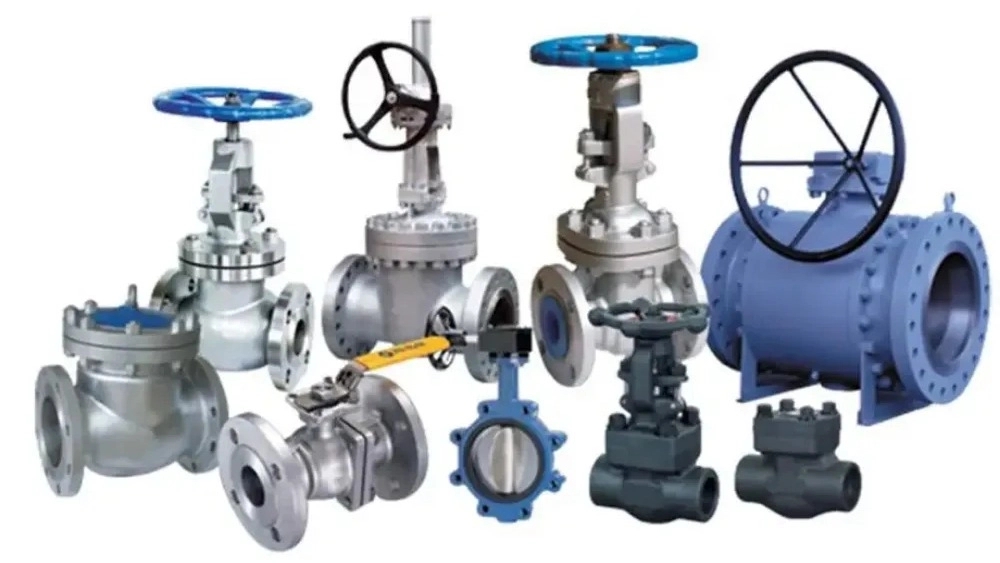
Application of all kinds of industrial valves
Turn off and on the current
Fluid pressure adjustment
Preventing the return of passed fluids
Keeping devices safe
Controlling the amount of fluid flow
Different types of piping and vowel valves
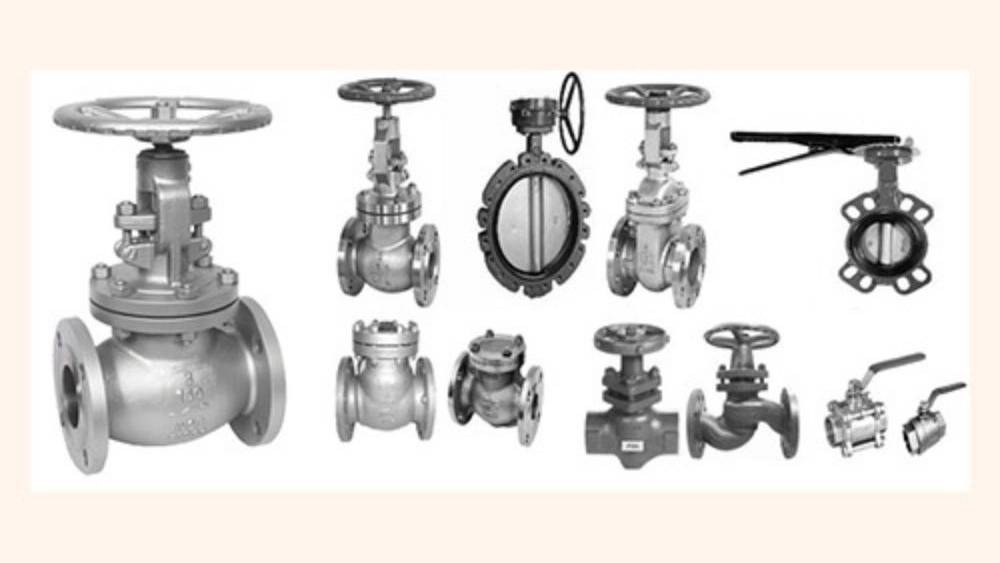
Credit. According to the structure:
Globe valve: This valve is called a globe valve because of its spherical appearance. This valve can be used to control the flow so that the fluid flow changes direction unlike the sliding valve, but this change of direction causes turbulence and due to the sudden change of the fluid path, it opens and closes much faster. It is done from others. It should be noted that the material of the ball valve is usually stainless steel or nickel.
Samavari valve (Plug valve): Samavari valve is a type of industrial valve that works with rotary movement and is usually used to control the flow of fluids. The element that blocks the way of fluids in this valve is in the form of a cylinder or cone with a channel to pass.
Gate Valve (Gate Valve):
Sliding valves are one of the most popular industrial valves that are mostly used in places where they want to completely close or open the fluid flow. One of the advantages of this valve is the low pressure drop along it, which makes it suitable for long pipes. When the gate is completely down, the fluid experiences turbulence and pressure drop due to collision with it and changing direction. It is also worth mentioning that the sliding valve has two types: knife and wedge.
Needle valve: The name of the needle valve is derived from the shape of its disc because the disc of this valve consists of a thin conical rod, whose fineness and precise control make it used in important projects such as petrochemical laboratories. It is also interesting to know that structurally, this valve is one of the spherical valves.
Diaphragm Valve (Diaphragm Valve):
This valve has three parts: body, diaphragm and cap. Diaphragm can be said to adjust the amount of fluid, increasing or decreasing the passage of fluid. The use of diaphragm valves is not recommended for systems with high temperatures, because at high temperatures, the diaphragm melts, so it is better to use this type of valve at low temperatures and pressures.
Butterfly valves: This model is one of the most widely used industrial valves in industries such as oil, gas and petrochemical. The structure of the butterfly valve is a circular plate and a normal body. The circular plate rotates 90 degrees around the rod and is connected to the moving part by means of a lever, which can be electric or manual. The features of this valve include maximizing fluid speed in the shortest time, controllability, ease of use, low price, etc.
One -way valve (check valve):
One-way valves are types of non-return piping valves that are used to prevent fluid from moving in the opposite direction. These valves enable unobstructed flow and closing the path if the pressure is low and are used in industry and household appliances.
Safety valve: steam boilers, compressors, turbines and other installations under pressure may sometimes break down and cause the pressure of the devices to increase too much, which in this case causes financial losses and even lives. . To prevent this from happening, safety valves are used to open automatically when the pressure rises and empty some of the content to lower the pressure. Atmanian valves are divided into three categories: safety, relief, and safety relief.
The components of the structure of the industrial valves
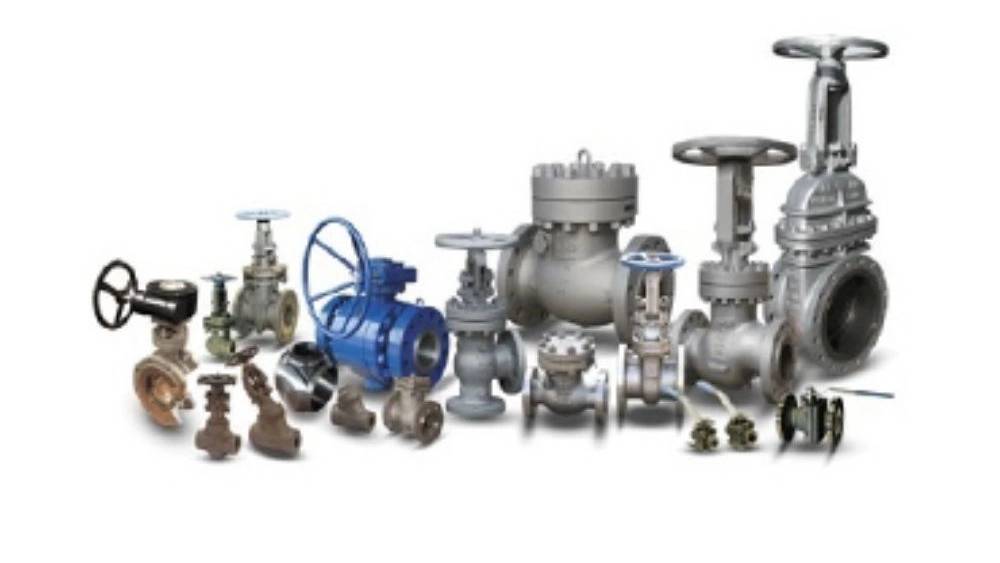
Nut (Hand-Wheel Nut): Using a nut, the handle is tightened to the stem, and its material is considered simple carbon steel.
Obturator: This member is a part of the valve that, as the name suggests, is responsible for connecting and disconnecting the flow. This piece has a different shape in each valve, for example, it is conical in the Samavari valve, spherical in the ball valve, and wedge-shaped in the gate valve.
Gaskets: In valves where the body, cap, etc. are connected with a flange, it is better to place a gasket between these flanges for the purpose of sealing. It is worth mentioning that when choosing a gasket, you should pay attention to the fact that the gasket in question must be able to withstand the fluid pressure of that valve.